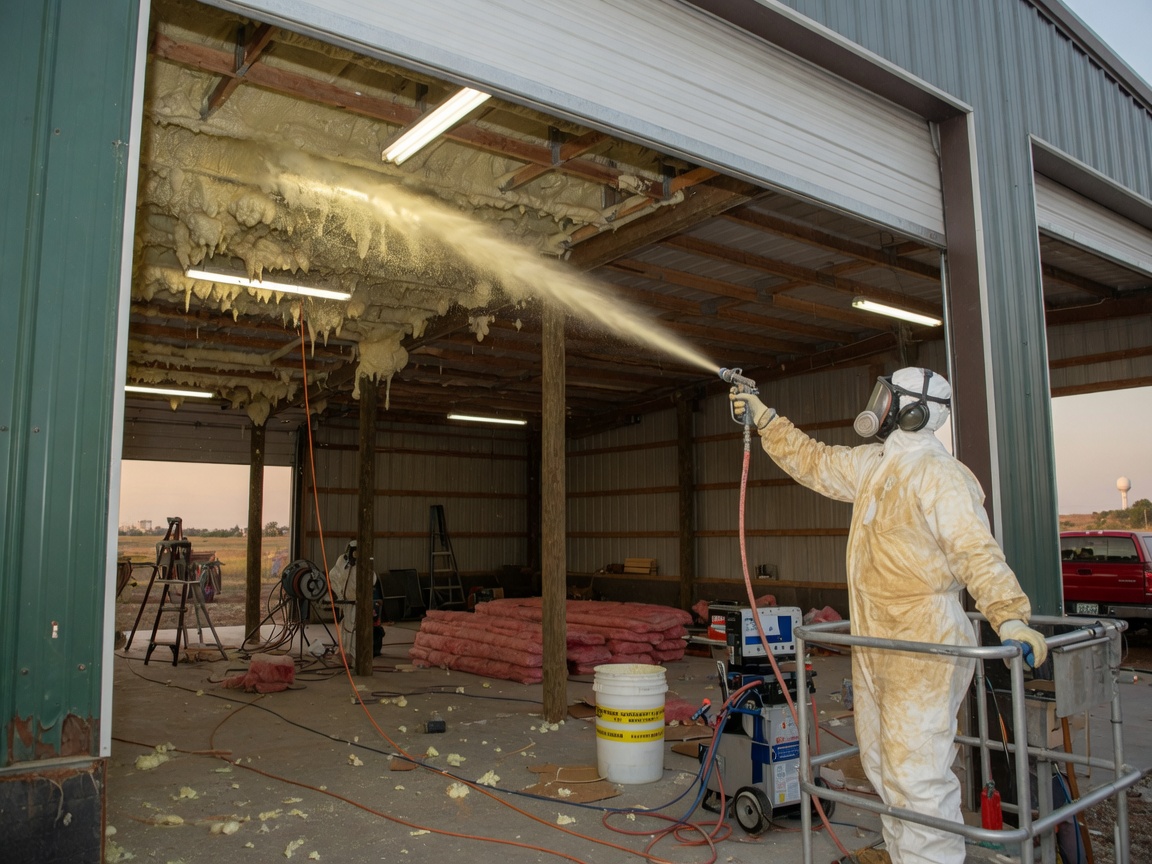
Tulsa pole barns often sit on open lots in areas like Jenks and Bixby where wind-driven rain from severe thunderstorms can push moisture into seams. Closed-cell spray foam creates a rigid air and water barrier that stops condensation on metal roofing when summer humidity spikes above 70 percent. Open-cell foam works better in barns used for livestock or equipment storage because it allows some vapor movement while still cutting winter heat loss during cold snaps that drop below freezing.
Application timing matters here. Foam must be sprayed when surface temperatures stay above 50 degrees, which limits winter work to heated barns or midday windows. In older pole barns near Route 66 Historical Village or the Greenwood district, uneven purlins and existing gaps around skylights require extra prep to avoid voids that later collect dust and reduce performance. Proper thickness also helps meet Tulsa County energy code expectations for unconditioned agricultural structures.
Edge cases include barns near the Arkansas River floodplain where soil moisture rises through slab edges. Technicians tape and seal bottom plates before spraying to keep water from wicking into the foam. In Maple Ridge and Utica Square outbuildings, low roof pitches demand careful overspray control so foam does not clog ridge vents needed for summer heat relief.
Technician insight
In Tulsa the thing that catches most people out with pole barn spray foam is underestimating how quickly summer humidity builds inside metal buildings after a thunderstorm. Barns in Jenks and Bixby often need closed-cell at the roof deck to stop condensation on purlins once temperatures swing from 95 degrees to 60 overnight.
Jenks pole barn condensation fix
Owner reported dripping from the roof deck each morning after humid nights. Inspection showed open gaps at the ridge allowing warm moist air to reach cold metal. We prepped surfaces and applied two inches of closed-cell foam across the underside of the roof. Condensation stopped and the barn stayed warmer through the first cold snap.
Pole Barn Spray Foam Insulation Services We Offer
✓Closed Cell Spray Foam for Metal Roofs
Adds structural rigidity and blocks humid air from reaching cold metal surfaces during Tulsa winters.
✓Open Cell Spray Foam for Livestock Barns
Allows moisture vapor to escape while cutting heating costs in heated animal housing around Bixby and Owasso.
✓Pole Barn Wall Insulation
Fills cavities between posts to reduce drafts from frequent spring thunderstorms common in Tulsa County.
✓Attic Floor Spray Foam in Pole Barns
Seals the ceiling plane so conditioned air does not escape into the uninsulated roof space above workshops in Jenks.
✓Vapor Retarder Integration
Pairs spray foam with proper barriers to manage summer humidity loads in barns near Woodward Park and the Tulsa Zoo.
Pole Barn Spray Foam Insulation Cost in Tulsa, OK
| Service | Typical Range | What Affects It |
|---|---|---|
| Small pole barn under 1,000 sq ft | $1,800–$2,800 | Single-story metal building with clear access |
| Standard 1,500–2,500 sq ft barn | $3,200–$5,100 | Includes walls and roof deck |
| Livestock barn open-cell upgrade | $2,400–$4,000 | Higher volume needed for vapor permeability |
| Add-on vapor barrier and trim work | $450–$850 | Required on river-adjacent lots |
Ranges are typical for Tulsa, OK and confirmed with an exact written quote before any work starts.
How it works
- 1
Site Assessment
Measure square footage, check roof pitch, and note existing ventilation in barns located in Cherry Street or Pearl District outbuildings.
- 2
Surface Preparation
Clean metal and wood, seal gaps at posts, and mask doors and windows before foam application.
- 3
Foam Application
Spray closed or open cell foam to specified thickness while monitoring temperature and humidity in real time.
- 4
Trim And Vent Check
Trim excess foam and verify ridge and eave vents remain clear for summer airflow.
- 5
Final Walkthrough
Review finished surfaces with the owner and explain maintenance for severe weather seasons.
Pricing
Final price depends on barn size, foam type, and access conditions.