2026-10-01 · Tom Harlan
Attic Insulation Removal in Tulsa: When Old Insulation Has to Go
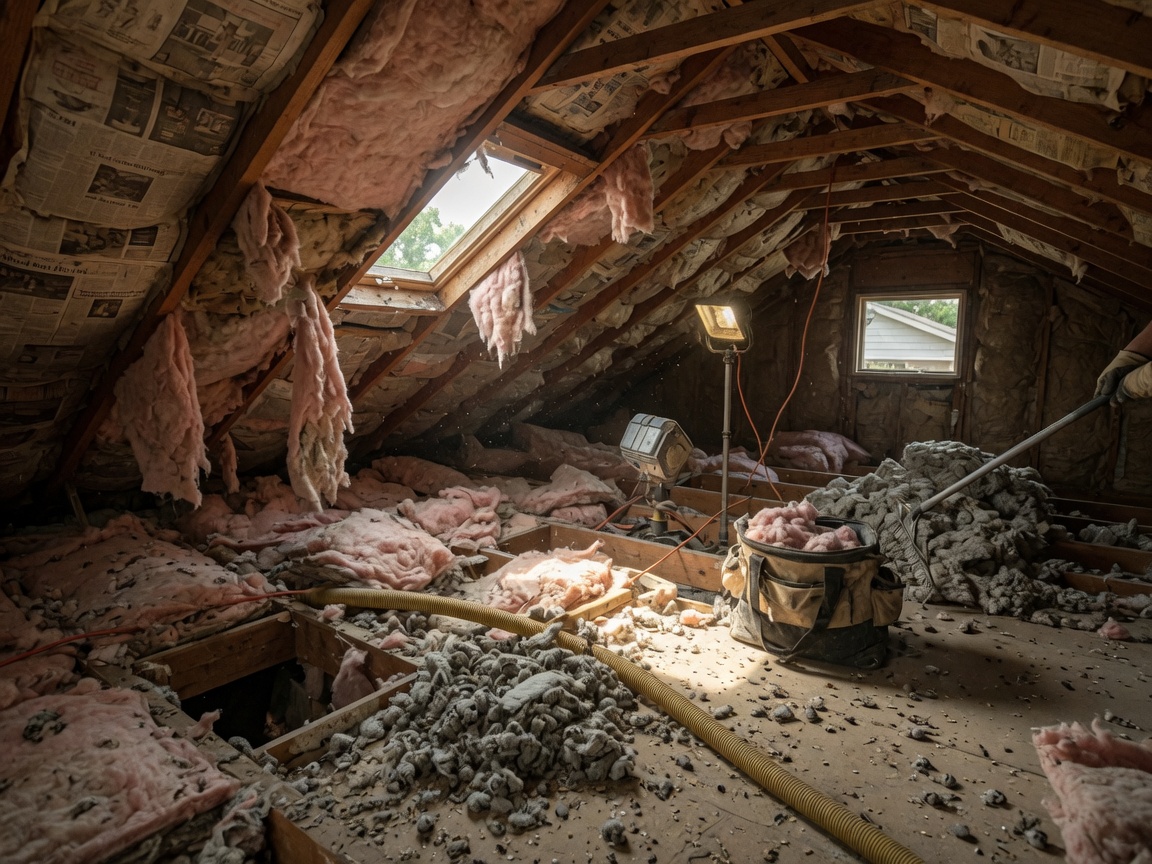
Old attic insulation in Tulsa homes needs removal most often when moisture from severe thunderstorms has caused mold, when it has settled after 15–20 years, or when pests have contaminated the material. These conditions appear regularly in neighborhoods with older housing stock such as Maple Ridge, Cherry Street, and Greenwood, where attics were originally insulated with materials that cannot handle repeated humidity cycles or roof leaks common in Tulsa County.
Signs of Moisture Damage from Local Weather
Tulsa's warm humid summers followed by cold winters create repeated condensation cycles inside attics. When roof leaks from thunderstorms allow water into cellulose or fiberglass, the insulation loses R-value and grows mold within weeks. Homeowners in Brookside and Utica Square often discover dark staining on ceiling drywall or a musty smell after heavy spring storms. In these cases removal is required before new material can be installed, because wet insulation will ruin replacement layers and encourage further mold growth along rafters. Checking for soft spots near attic access points after each storm season helps catch problems before they spread across the entire 1,000–2,000 square foot attic typical of Tulsa homes.
When Settling or Age Makes Replacement Necessary
Homes in Maple Ridge and the Pearl District built before 1980 frequently contain original insulation that has compressed over decades. Once settled below effective R-values, the material no longer slows heat transfer during summer peaks or winter lows. Attempting to add new insulation over compacted layers traps moisture and creates uneven performance. Removal restores the full depth needed for proper coverage. The process also reveals roof deck issues hidden for years, allowing repairs before new insulation is blown or sprayed in place. Older attics in these neighborhoods often require 8–12 hours of careful extraction to avoid disturbing knob-and-tube wiring still present in some structures.
Pests and Contamination Common in Tulsa Attics
Rodents and insects enter attics through gaps around vents and soffits, especially after severe weather damages screens. In areas like Jenks and Bixby, insulation removal becomes necessary when droppings or nesting material contaminate large sections. Leaving contaminated insulation in place spreads allergens through HVAC systems that draw air from the attic. Removal crews bag and dispose of the material the same day to prevent cross-contamination during the job. This step also lets technicians inspect for entry points that need sealing before new insulation is added.
Preparing for Removal in Tulsa County Homes
Before work begins, crews cover living spaces below with plastic sheeting and use HEPA vacuums to control dust. In two-story homes common along Cherry Street, temporary stair protection prevents damage during equipment movement. The job typically takes one to two days depending on attic size and access. After removal, the space is ready for inspection of electrical and plumbing lines that may need attention before new insulation installation. Homeowners in Owasso and Broken Arrow often schedule removal in early fall so the attic can be re-insulated before winter temperatures arrive.
For guidance on choosing the right replacement material after removal, see the R-value recommendations for Oklahoma homes. When planning the full project, review the dedicated Insulation Removal service details and compare options in the Closed Cell vs Open Cell Spray Foam article.