2026-10-01 · Tom Harlan
Spray Foam vs Blown-In Attic Insulation: Which Is Right for Your Tulsa Home?
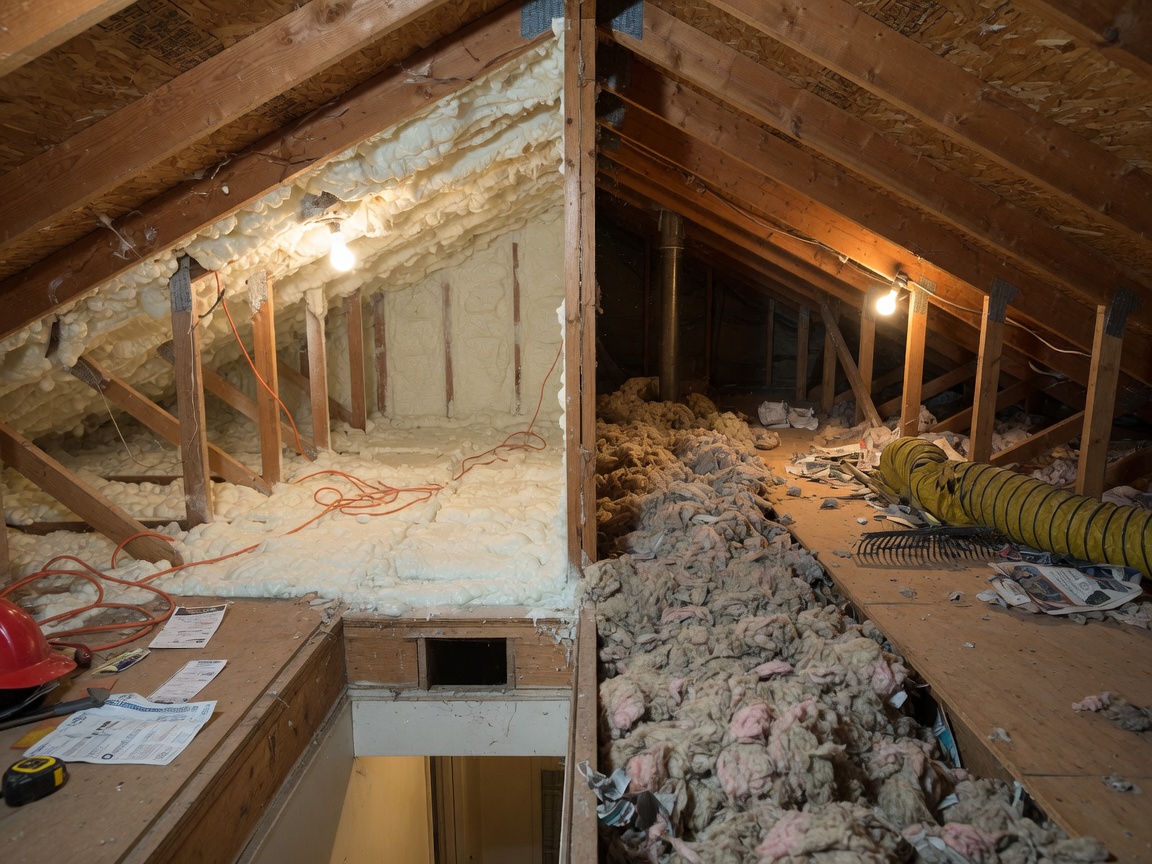
For most homes in Tulsa County, blown-in insulation is the right choice over spray foam because it costs less upfront, allows attics to breathe during warm humid summers, and handles the cold winters without trapping moisture that leads to issues in neighborhoods such as Maple Ridge and Cherry Street. Spray foam becomes preferable only when homeowners need to create an unvented roof assembly or seal around complex ductwork in older stock.
How Tulsa Weather Shapes Insulation Performance
Tulsa's warm humid summers and frequent severe thunderstorms create high moisture loads that push through attics in areas like Downtown Tulsa and the Pearl District. Blown-in insulation such as cellulose or fiberglass allows vapor to pass more readily than closed-cell spray foam, reducing the chance of condensation on roof decking during rapid temperature swings. Cold winter nights drop below freezing often enough that both materials must deliver consistent R-value, yet blown-in settles less in the wind-driven conditions common near the BOK Center and Cain's Ballroom. Homeowners in Brookside and Utica Square see these patterns repeat yearly, making breathability a practical factor when choosing between the two options.
Installation Realities in Older Tulsa Housing Stock
Many homes in Greenwood, Jenks, and Bixby date from the 1940s through 1970s with knob-and-tube wiring or shallow attic cavities that favor blown-in insulation because installers can work around existing obstacles without cutting rafters. Spray foam requires more prep time to mask electrical boxes and vents, adding labor in tight spaces typical of Maple Ridge bungalows. Local crews routinely remove old insulation first in these neighborhoods before adding new material, and the process differs sharply between loose-fill blown-in and expanding foam that adheres permanently to surfaces.
Cost and Longevity Factors for 1,000 to 2,000 Sq Ft Attics
Material and labor for blown-in insulation in a typical Tulsa attic runs lower than closed-cell spray foam, with the difference most noticeable in larger attics found in Owasso and Broken Arrow homes. Blown-in lasts 20–30 years before settling requires topping off, while spray foam can exceed 50 years if the roof deck remains sound. Factors such as access through gable vents, depth needed to reach R-49, and whether existing material must be removed all shift the final price in real jobs across Tulsa County.
When Spray Foam Fits Tulsa Attics Better
Closed-cell spray foam earns its place when homeowners convert an attic into conditioned space or address chronic leaks around skylights in Woodward Park area homes. It creates an air seal that blown-in cannot match, which helps in pole barns or shops where temperature control matters year-round. Readers exploring that route can review the differences in Closed Cell vs Open Cell Spray Foam for Tulsa Attics, Pole Barns and Shops or compare real project pricing in Blown-In Insulation Cost in Tulsa: What 1,000 to 2,000 Sq Ft Attics Really Cost. For standard vented attics, the service pages on blown-in insulation and closed-cell spray foam insulation outline the exact steps crews follow in local homes.